Skaus: Hjem
Public installation for Stavanger 2025 – Emigration Commemoration – Jorenholmen, Norway
Skaus is an art project founded in Stavanger in 2019 by artists Håvard Sagen, Markus Bråten and Mari Kolbeinson. It functions as a support structure, creating meeting points between places, artists, institutions, social infrastructures, and audiences. The project focuses on developing new forms of collaboration and methods related to origin, authorship, and reproducibility.
![Initiation of Skaus: Hjem. Photo by Håvard Sagen]()
![Initiation of Skaus: Hjem. Photo by Håvard Sagen]()
![Felix Shumba – B Sunflower Seeds – Multi-day performance. Photo by Erik Sæter Jørgensen]()
![Felix Shumba – B Sunflower Seeds – Multi-day performance. Photo by Erik Sæter Jørgensen]()
![antipodes café – Visning – Multi-day screening during Stavanger Pride. Photo by Erik Sæter Jørgensen]()
![6,1 x 5,3 – First year students of Stavanger Art School with Guidance from Goro Tronsmo. Photo by Studio Hivand.]()
![Ellen Sofie Griegel – Rund som tiden. Photo by Erik Sæter Jørgensen.]()
![Ioana Ispas – X. Photo by Håvard Sagen]()
![Anders Hergum – Considerations. Photo by Erik Sæter Jørgensen.]()
Skaus is an art project founded in Stavanger in 2019 by artists Håvard Sagen, Markus Bråten and Mari Kolbeinson. It functions as a support structure, creating meeting points between places, artists, institutions, social infrastructures, and audiences. The project focuses on developing new forms of collaboration and methods related to origin, authorship, and reproducibility.
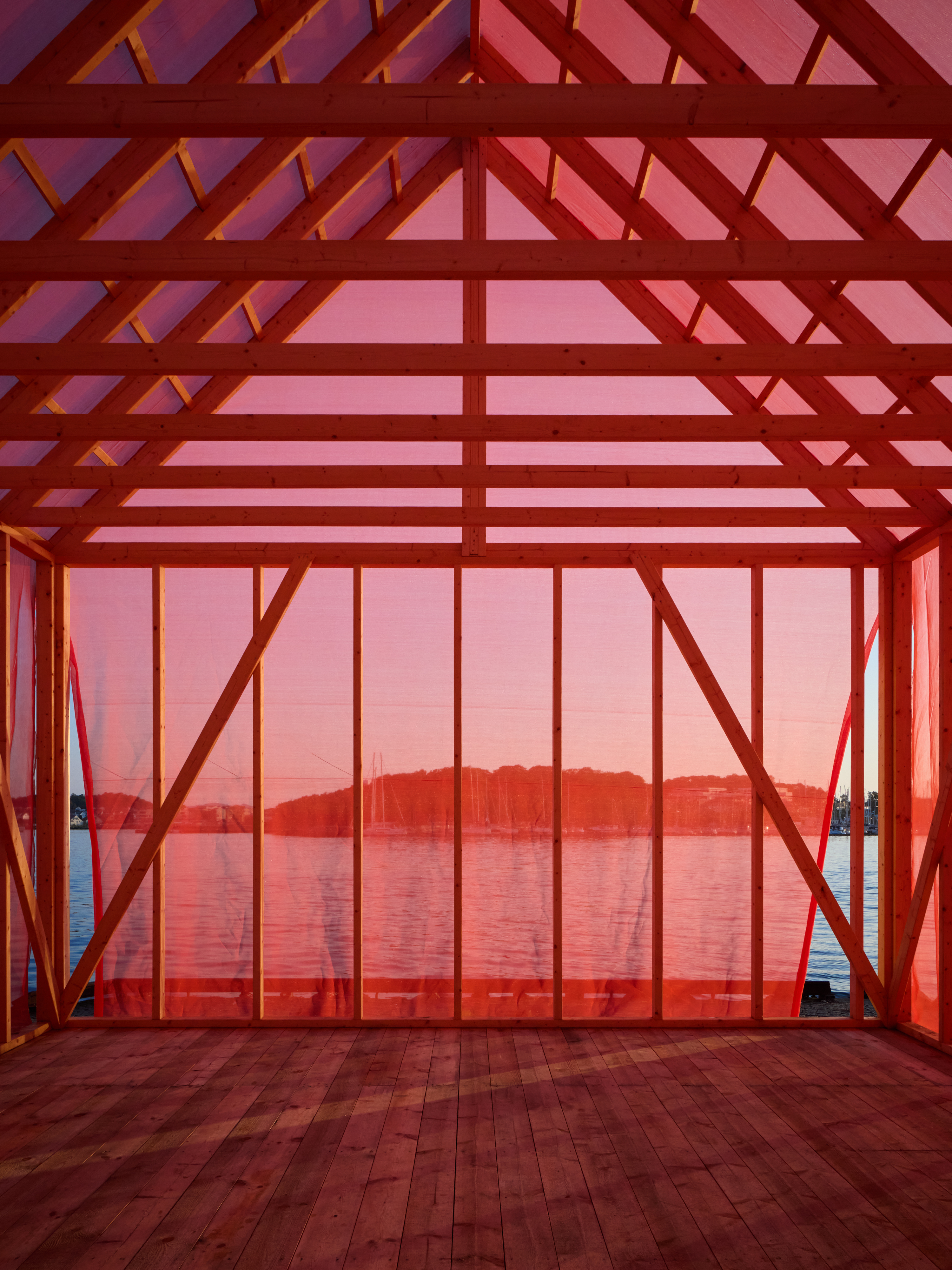
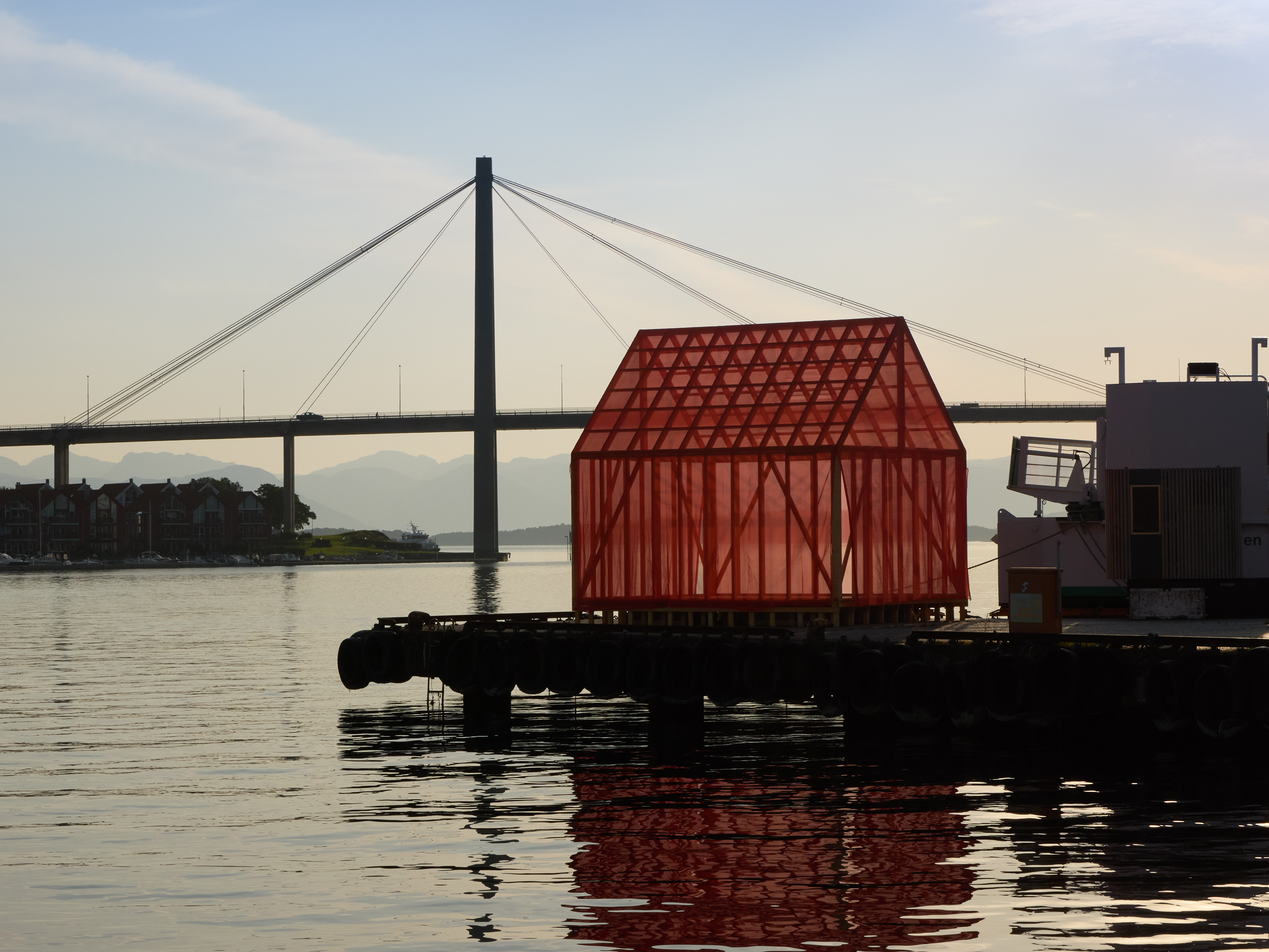
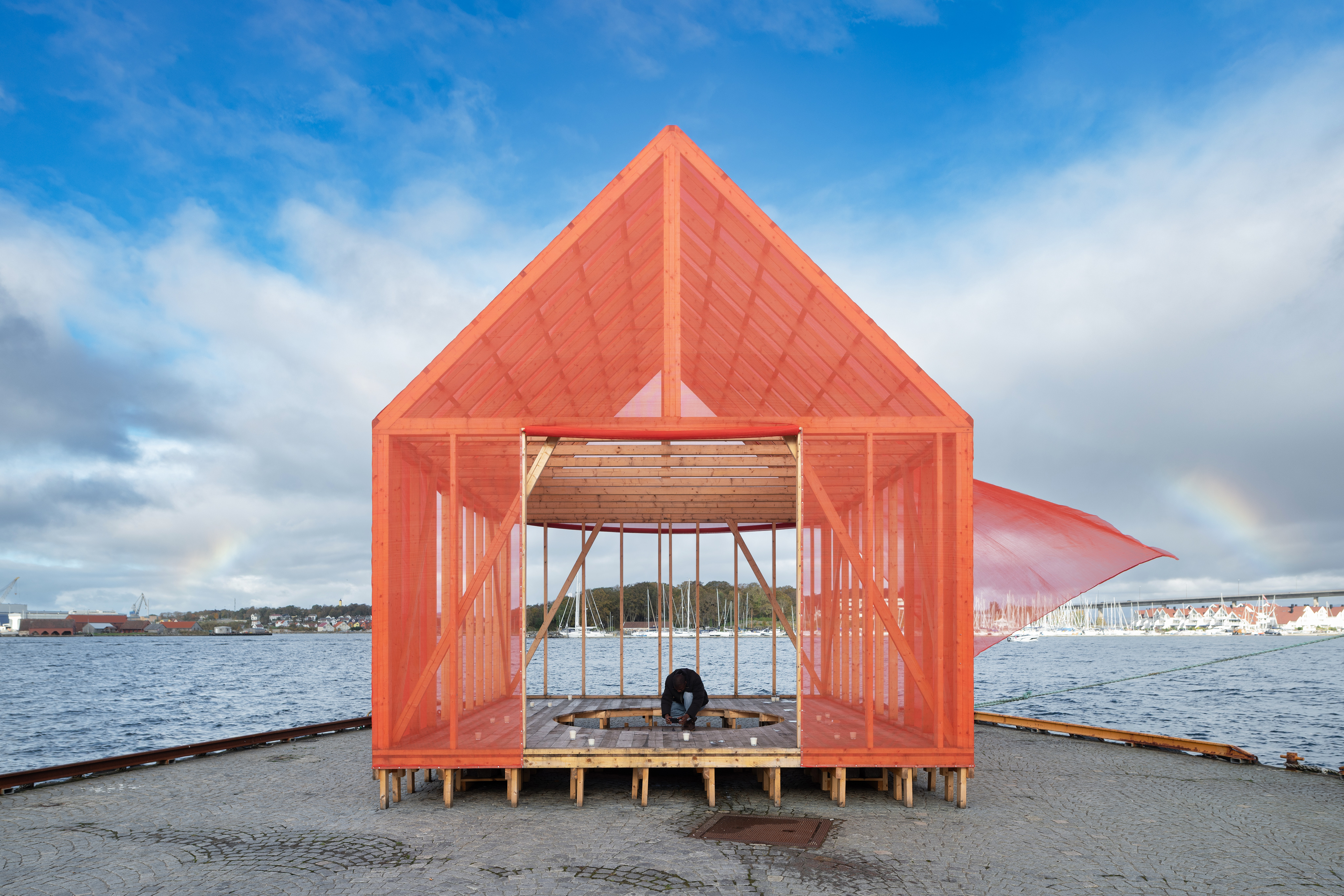
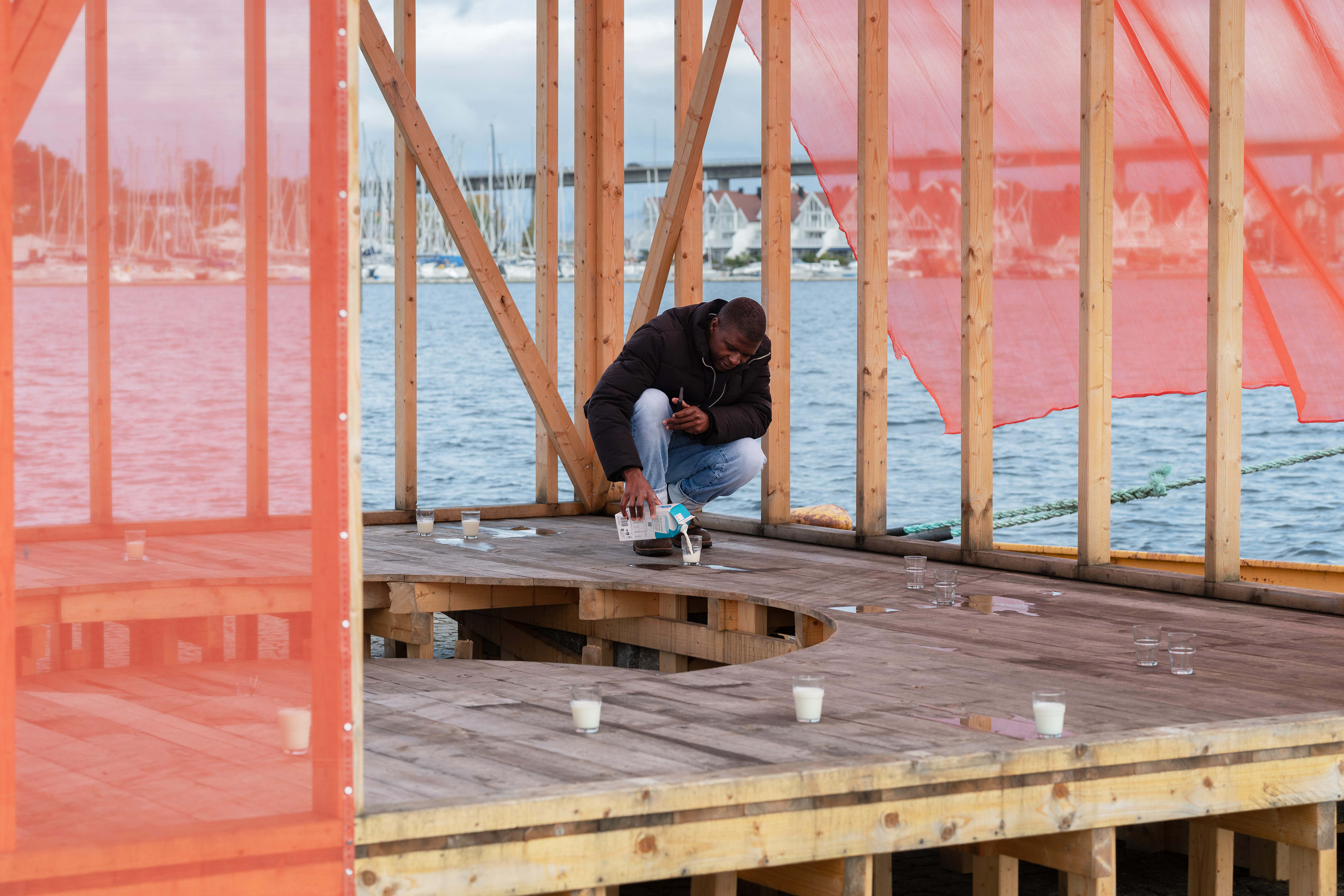


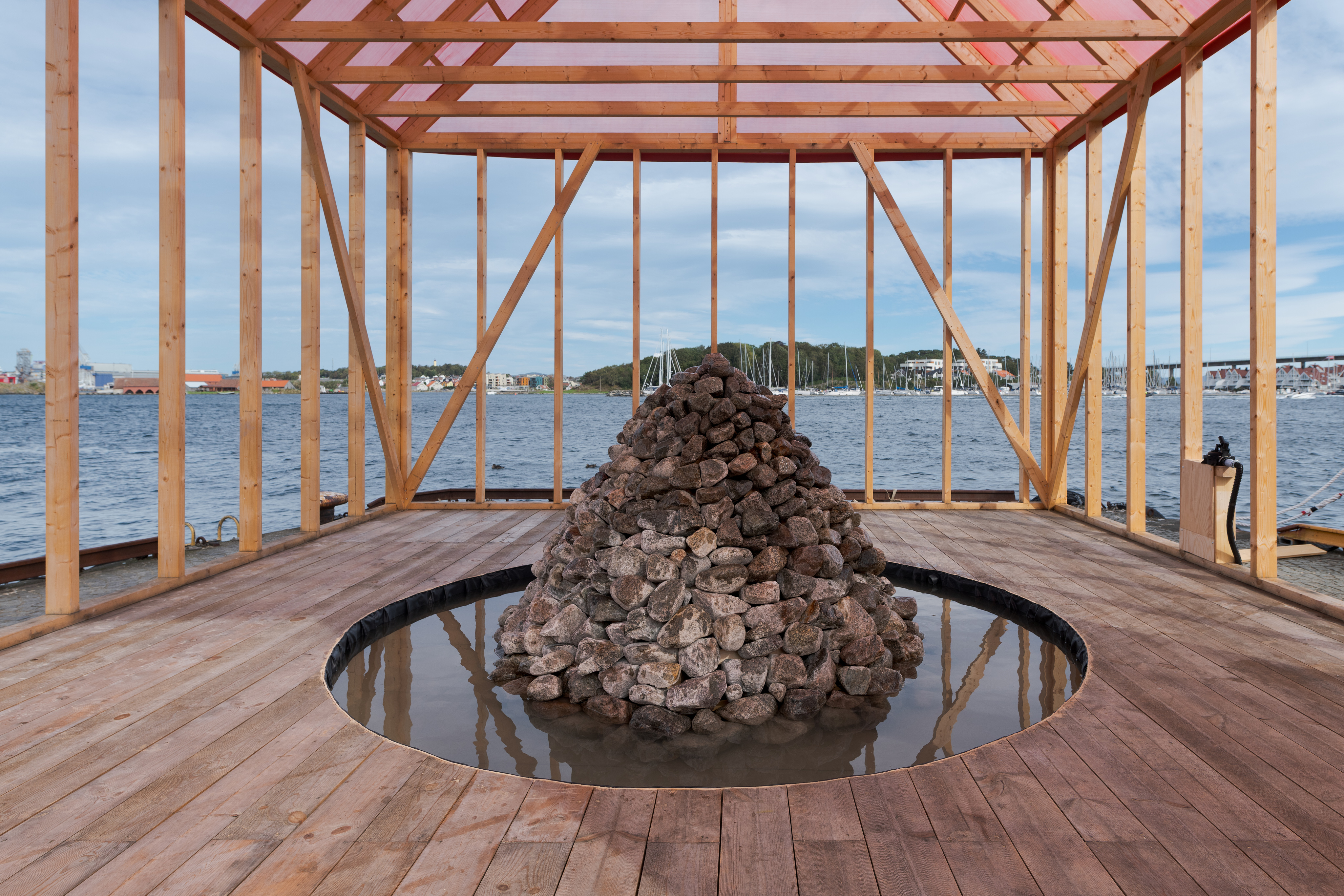
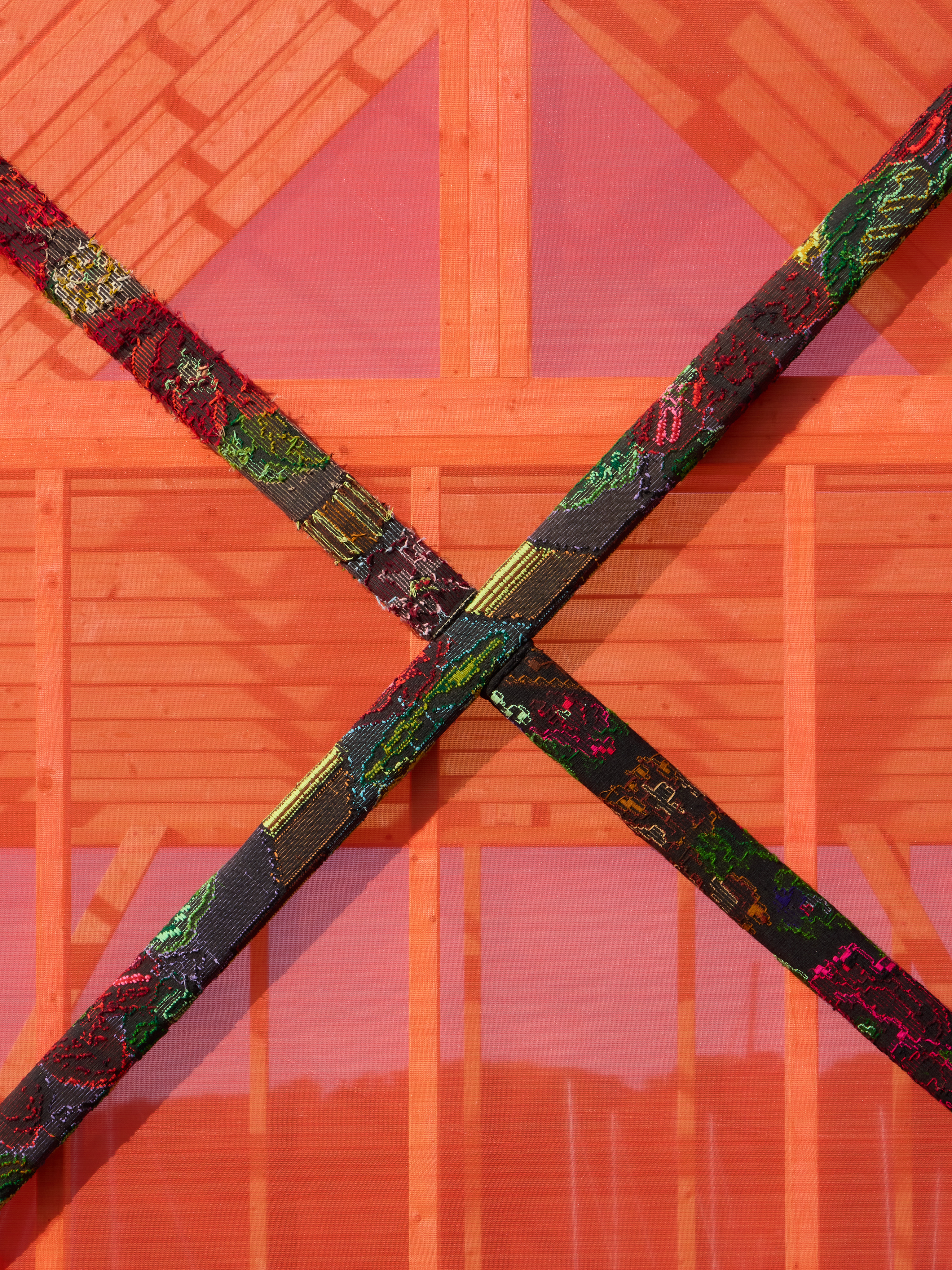
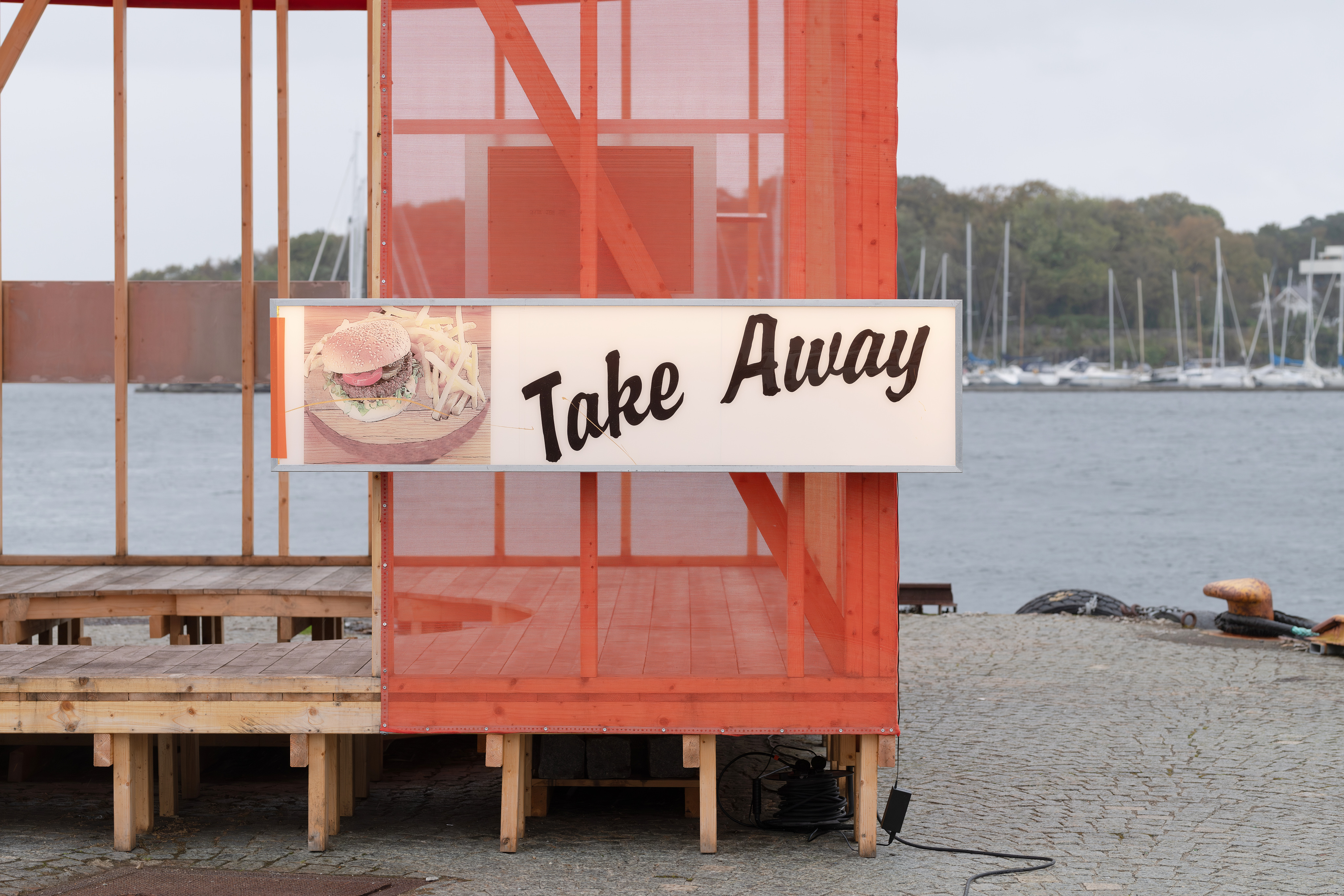
For the Stavanger Municipality’s 2025 Emigration Commemoration, Skaus were commissioned to produce a project exploring the concepts of home and belonging – themes that have been a conceptual preoccupation of the collective since their initiation. For the commission, they constructed a timber pavilion on the Stavanger harbour front, the form of which was based on their idea of the archetypical house. Hjem – the project title – is the Norwegian word for home.
As in previous projects by Skaus, the structure hosted a series of artistic interventions. For this iteration Skaus invited previous contributors to ‘pass the torch’ by nominating a practitioner they would like to see platformed. The selected artists then, in sequence, occupied and responded to the structure.
As in previous projects by Skaus, the structure hosted a series of artistic interventions. For this iteration Skaus invited previous contributors to ‘pass the torch’ by nominating a practitioner they would like to see platformed. The selected artists then, in sequence, occupied and responded to the structure.
The nominated contributors were Ioana Ispas (Romania), antipodes café (Portugal/Norway), Ellen Sofie Griegel (Norway), Felix Shumba (Zimbabwe), Anders Hergum (Sweden/Norway), and Stavanger Art School’s new students, with Goro Tronsmo (Norway) as their mentor.
The project received support from Stavanger Municipality, Rogaland County Municipality, Stavanger Harbour and Ramirent.
The project received support from Stavanger Municipality, Rogaland County Municipality, Stavanger Harbour and Ramirent.
Geode Tree
– With Tya Lovett and Tim Sweet
Wama Foundation - The National Centre for Environmental Art, Gariwerd/Grampians, Australia (2025)
![Tim Sweet and Tya Lovett. Photo by Håvard Sagen.]()
![Photo by Håvard Sagen.]()
![Photo by Håvard Sagen.]()
![Photo by Håvard Sagen.]()
![Photo by Håvard Sagen.]()
![Photo by Håvard Sagen.]()
![Photo by Håvard Sagen.]()
![Photo by Håvard Sagen.]()
![Photo by Håvard Sagen]()
![Photo by Håvard Sagen.]()
![Photo by Håvard Sagen]()
Wama Foundation - The National Centre for Environmental Art, Gariwerd/Grampians, Australia (2025)
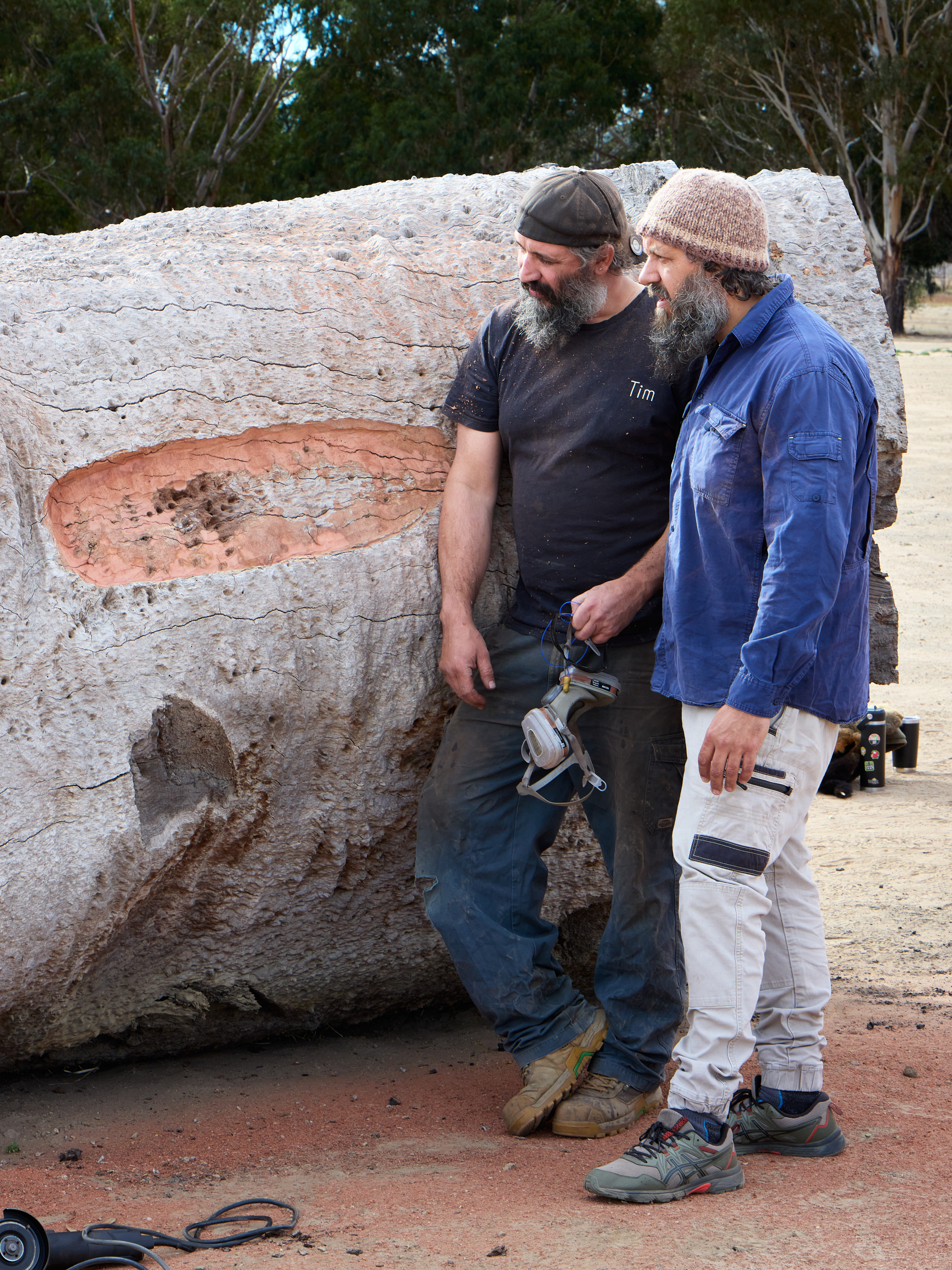


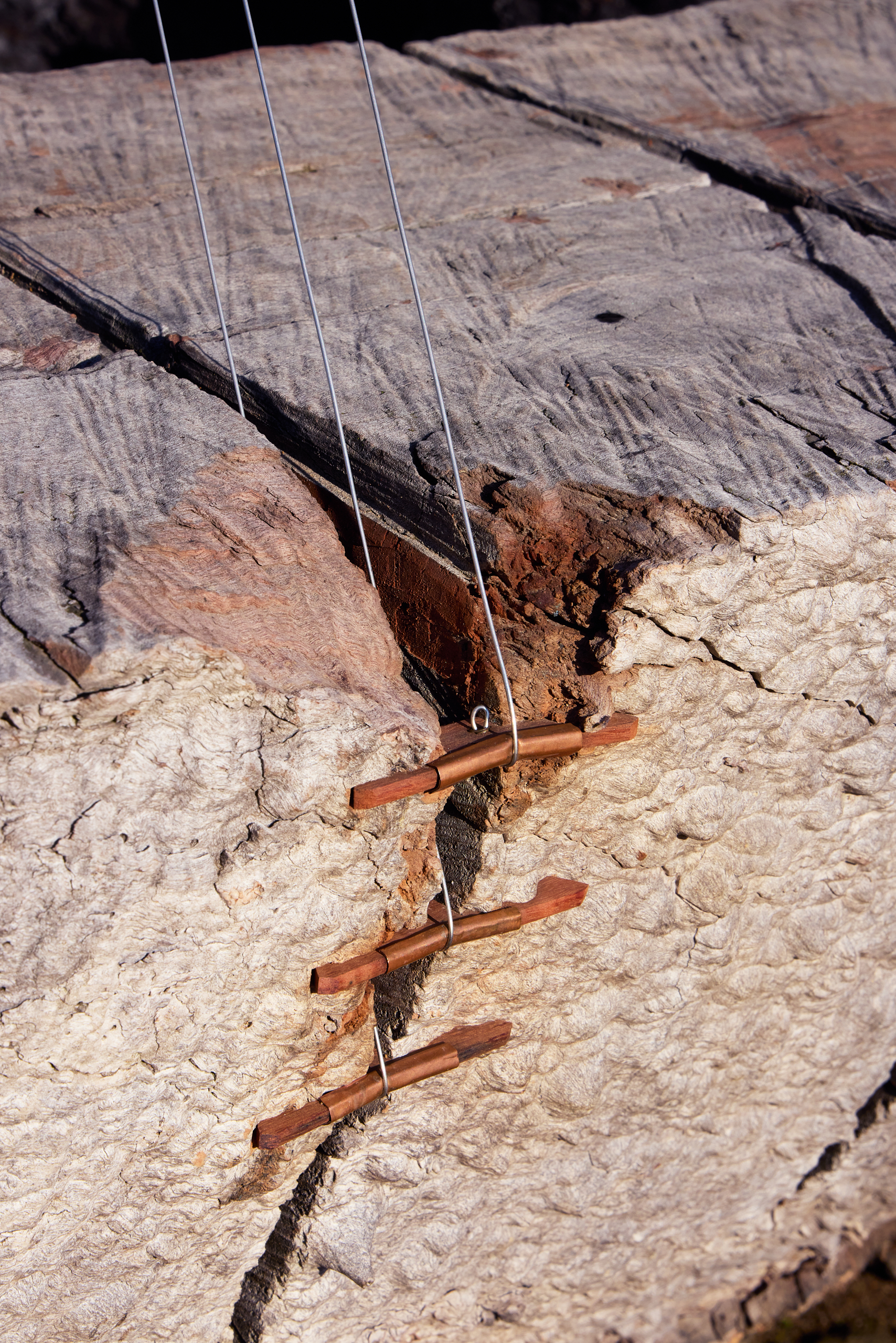
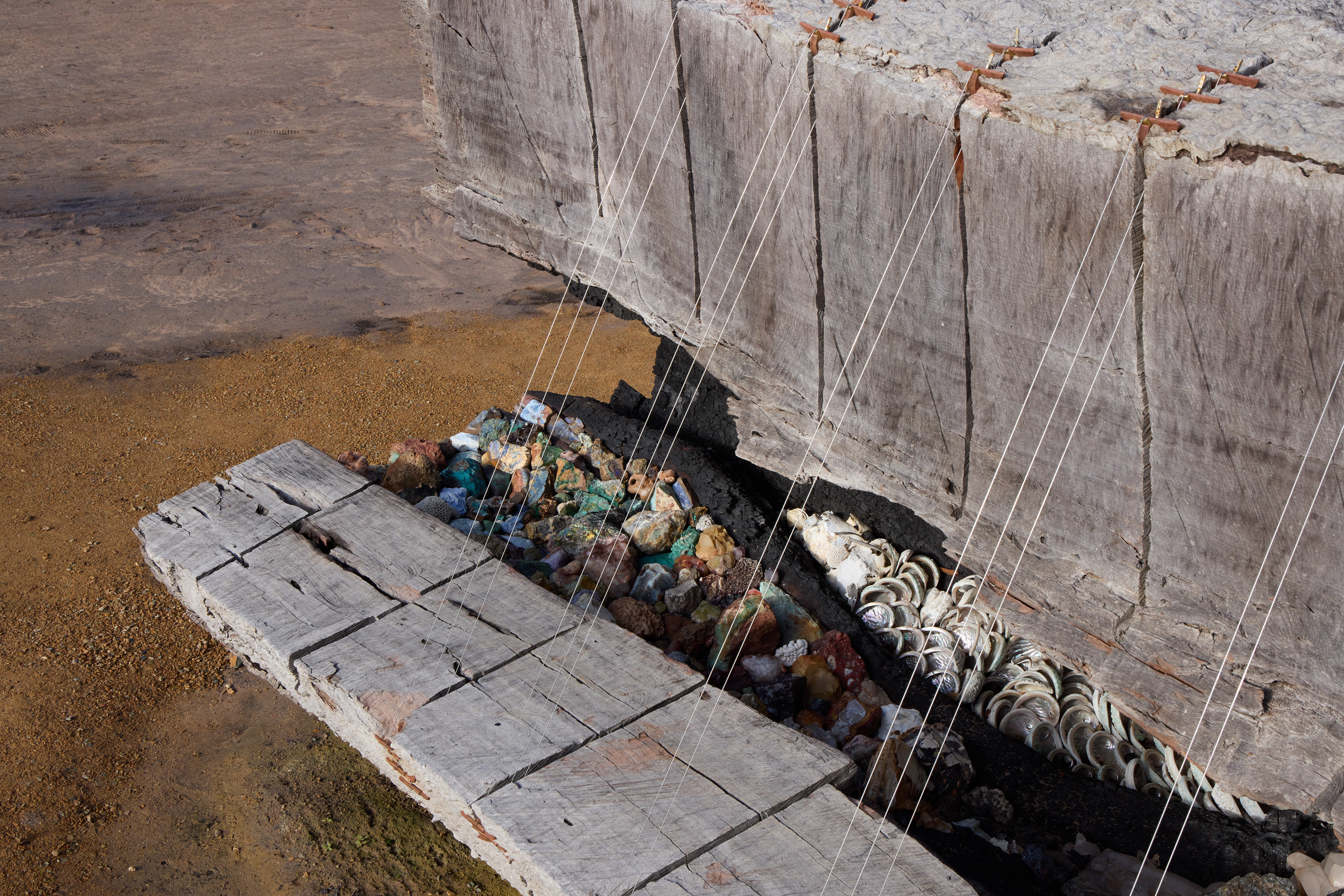
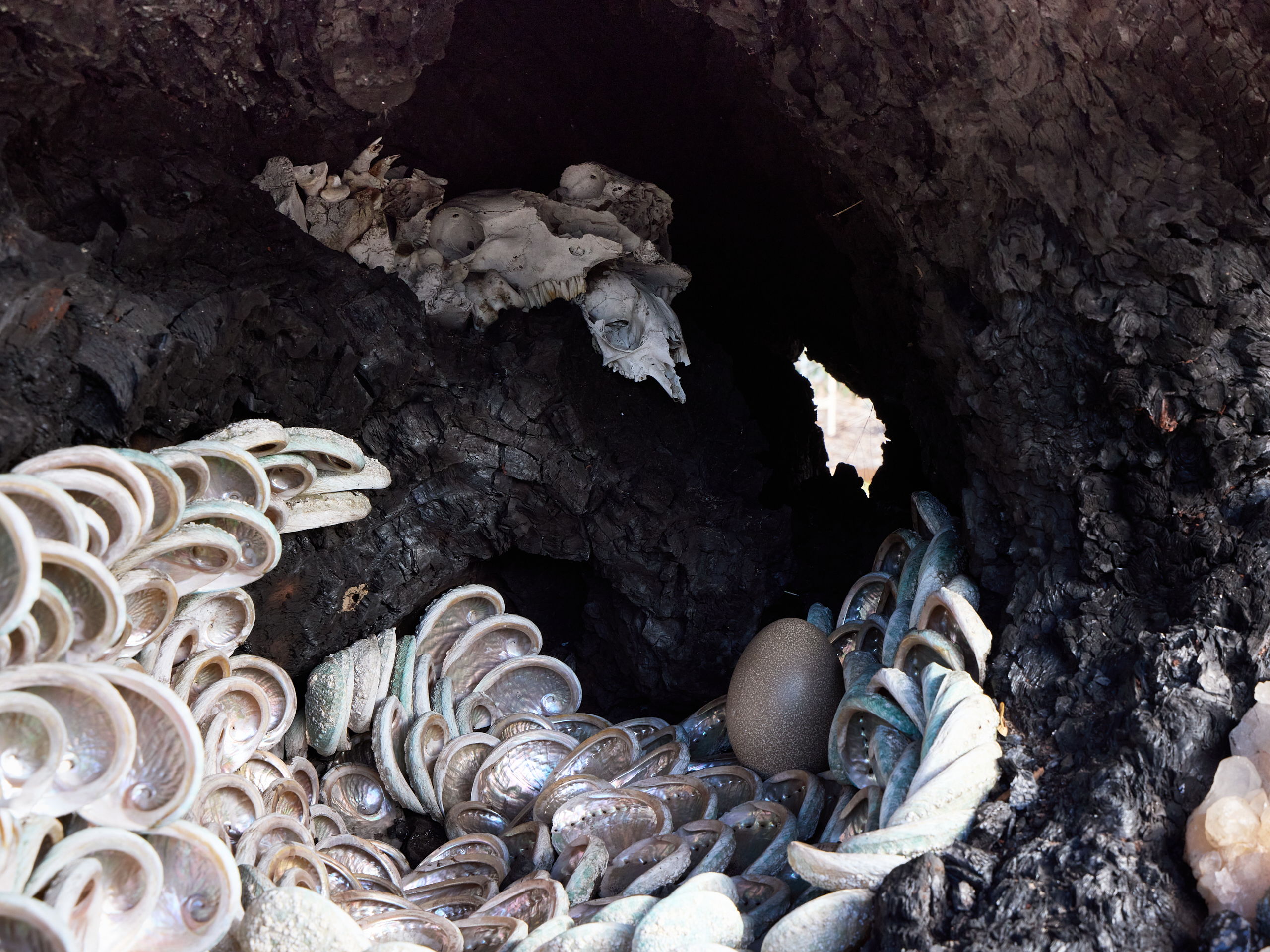

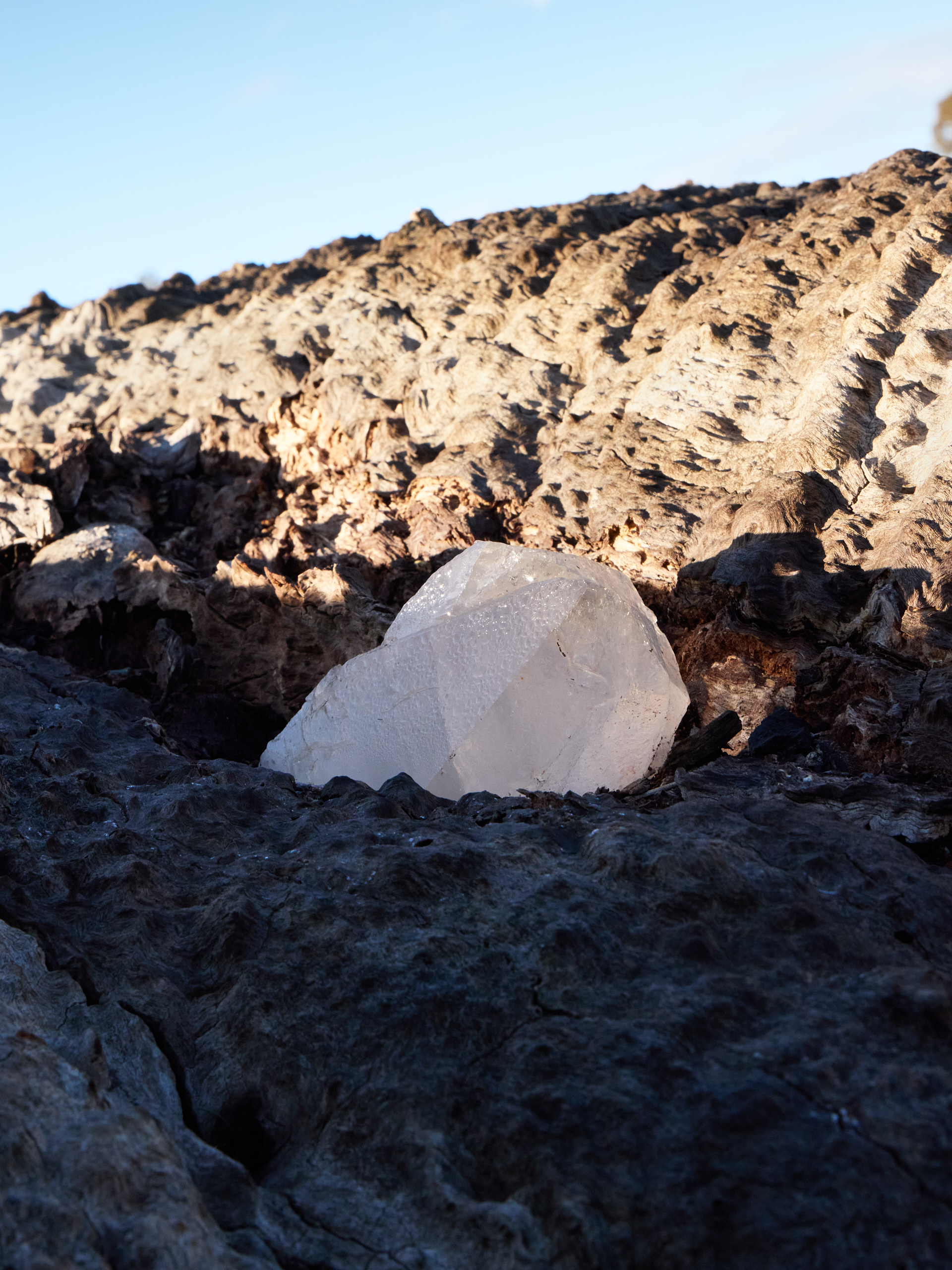


Produced by Håvard Sagen with Tya Lovett (Gunditjmara) and Tim Sweet (Tiwi), Geode Tree is a large-scale interactive sculpture and collaborative project featuring a fallen seven tonne River Red Gum (Eucalyptus camaldulensis), sourced locally near the Gariwerd/Grampians township of Moyston.
Widespread along the rivers and floodplains of Australia, the River Red Gum (Eucalyptus camaldulensis) can live for up to 1,000 years. With complex and elusive growth cycles, the species defies the conventions of dendrochronology, its true vintage hard to define.
Indulging this mystique, the ancient giant holds other markers of time and place. Minerals, crystals, fossils, bones, and shells—spanning millennia—have been embedded within its charred hollow. Subverting the tradition of the cabinet of curiosities, the objects are presented as interconnected remnants within a once-living form. Strung with wind-activated musical wire, the piece invites tactile and sensory engagement while celebrating geological and cultural memory.
Widespread along the rivers and floodplains of Australia, the River Red Gum (Eucalyptus camaldulensis) can live for up to 1,000 years. With complex and elusive growth cycles, the species defies the conventions of dendrochronology, its true vintage hard to define.
Indulging this mystique, the ancient giant holds other markers of time and place. Minerals, crystals, fossils, bones, and shells—spanning millennia—have been embedded within its charred hollow. Subverting the tradition of the cabinet of curiosities, the objects are presented as interconnected remnants within a once-living form. Strung with wind-activated musical wire, the piece invites tactile and sensory engagement while celebrating geological and cultural memory.
Extending the lifeblood of this River Red Gum—and honoring its distinctive Cultural significance—the tree’s outermost layer has been scarred, in line with ancient and enduring Djab Wurrung, Jardwadjali, Gunditjmara and broader Aboriginal Cultural Practices.
Together, these elements deepen the sculpture’s narrative, inviting reflection on memory, transformation, and the entanglement of time, matter, life, and our place in the natural world.
Geode Tree was commissioned by the Lewin Family Foundation, as a gesture towards Glenda Lewin’s belief in the magic of nature play. The project was made possible through the generous support of local and regional collectors and institutions, many of whom kindly donated key elements. The artists gratefully acknowledge the contributions—both intellectual and material—of Renate and Berry Weinert, Tom Kapitany, Ocean Road Abalone, Neil and Wendy Marriott, Shane Hitchcock, Bronte Heron, and Walter G Atkinson.
Together, these elements deepen the sculpture’s narrative, inviting reflection on memory, transformation, and the entanglement of time, matter, life, and our place in the natural world.
Geode Tree was commissioned by the Lewin Family Foundation, as a gesture towards Glenda Lewin’s belief in the magic of nature play. The project was made possible through the generous support of local and regional collectors and institutions, many of whom kindly donated key elements. The artists gratefully acknowledge the contributions—both intellectual and material—of Renate and Berry Weinert, Tom Kapitany, Ocean Road Abalone, Neil and Wendy Marriott, Shane Hitchcock, Bronte Heron, and Walter G Atkinson.
Skaus: Trehus
– with Eladio Ramm and Yngvild Færøy8th Oslo Architecture Triennale - The Old Munch Museum (2022)
What do we expect of the places we share? How are we placed - as bodies and as communities - in our built environment? The work Trehus, initiated by art collective Skaus, experiments with the familiar hierarchies and forms of public space.
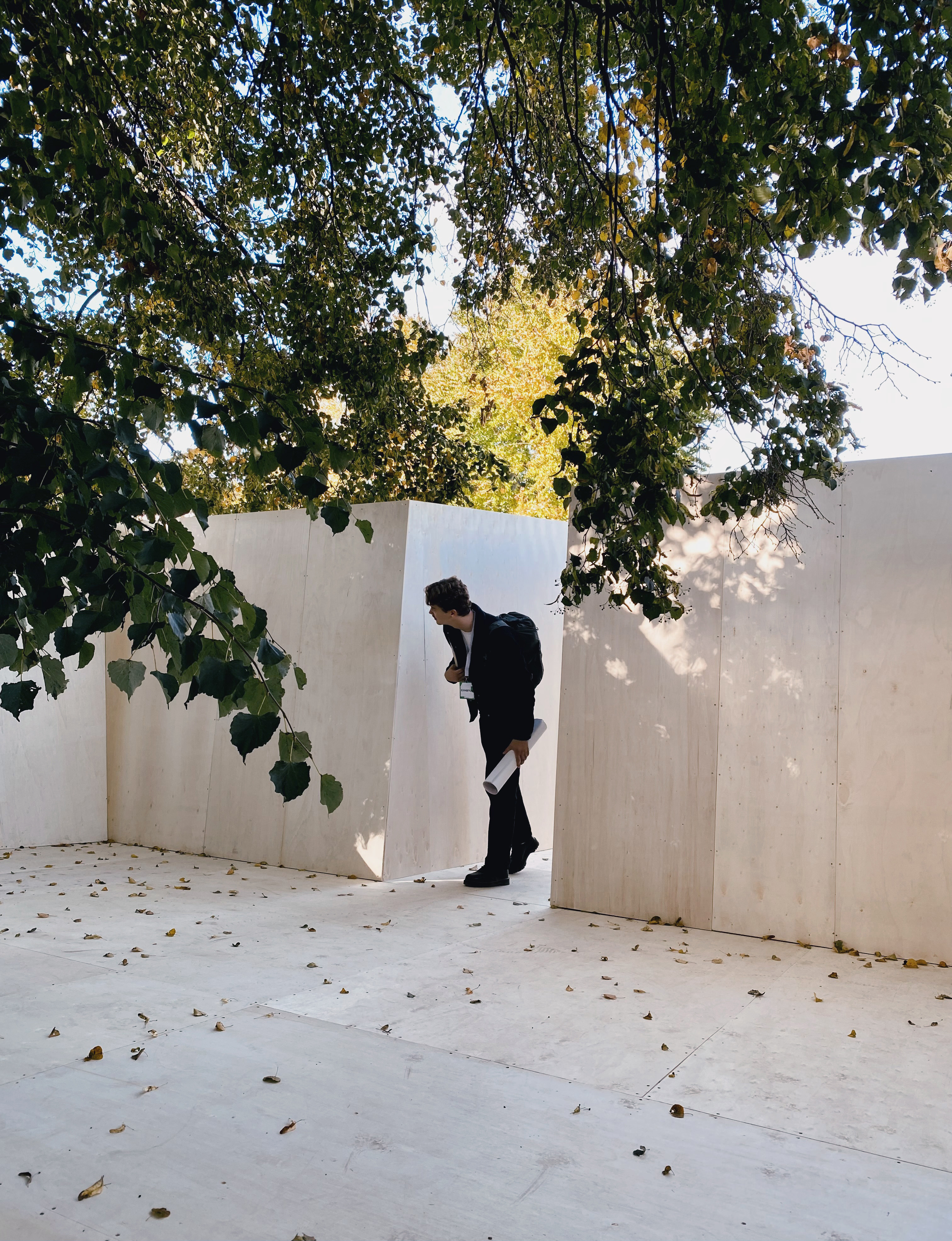

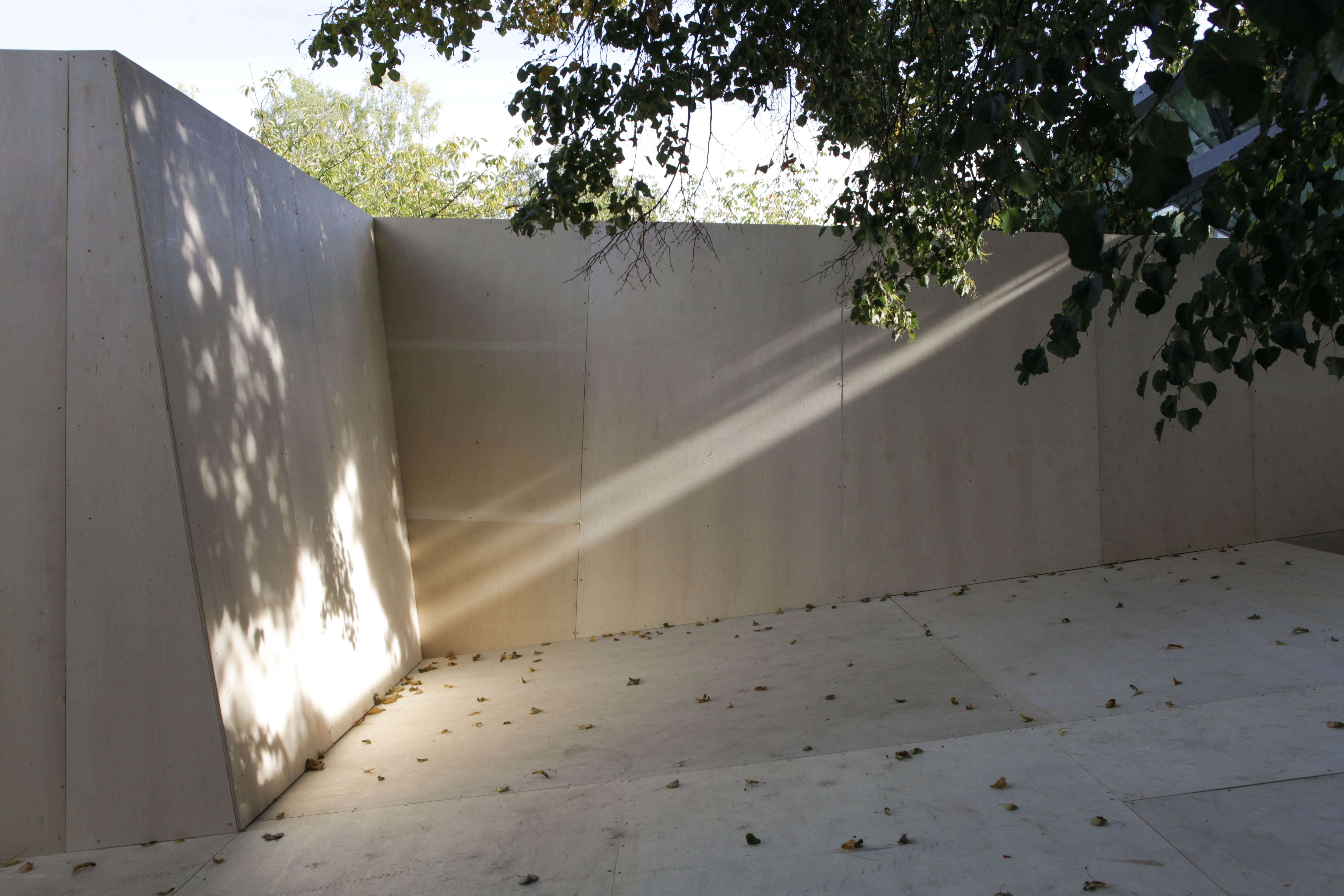

A temporary structure, Trehus (re)frames a linden tree by the entrance of the Old Munch Museum: taking a natural component of the urban landscape and elevating it to a place of sanctuary and stewardship. The spatial design and architectural concept, developed by architect studio Eladio Ramm, orchestrates an intimate and slightly uncanny experience. Sound artist Yngvild Færøy contributes with two soundworks that emphasize the vitality and vulnerability of the city's biotic dimension, highlighting human-plant relationships. Windchimes made by The Climate House youth program participants decorate the linden tree’s boughs and branches.
The collaboration demonstrates a shared interest in architectural and artistic interventions that explores the sensory and the conscious use of shared spaces, and the cultivation of community.
About the installation:
Trehus was made for the 8th Oslo Architecture Triennale by art collective Skaus in collaboration with architects Eladio Ramm, artist Yngvild Færøy, and the Natural History Museum’s Climate House youth program. Skaus is a collective founded by Norwegian artists Håvard Sagen, Mari Kolbeinson and Markus Bråten. Since their inception in 2019 Skaus have sought to explore the ways in which community understandings are acquired, challenged and changed.
The collaboration demonstrates a shared interest in architectural and artistic interventions that explores the sensory and the conscious use of shared spaces, and the cultivation of community.
About the installation:
Trehus was made for the 8th Oslo Architecture Triennale by art collective Skaus in collaboration with architects Eladio Ramm, artist Yngvild Færøy, and the Natural History Museum’s Climate House youth program. Skaus is a collective founded by Norwegian artists Håvard Sagen, Mari Kolbeinson and Markus Bråten. Since their inception in 2019 Skaus have sought to explore the ways in which community understandings are acquired, challenged and changed.
Team:
Håvard Sagen (Artist/Skaus), Mari Kolbeinson (Artist/Skaus), Markus Bråten (Artist/Skaus), Nicolai Ramm Østgaard (Architect, Eladio Ramm), David Eladio Hugo Cabo (Architect, Eladio Ramm), Yngvild Færøy (Artist), Eirin Bruholt (Event manager, Climate host at The Climat House, Botanical Garden, Natural History Museum), Pippa Mott (Writer and Research Curator)
Trehus received support from ARENA - Arts Council Norway and the Oslo Architecture Triennale.
Photos: Are Carlsen, David Hugo Cabo and Håvard Sagen
Håvard Sagen (Artist/Skaus), Mari Kolbeinson (Artist/Skaus), Markus Bråten (Artist/Skaus), Nicolai Ramm Østgaard (Architect, Eladio Ramm), David Eladio Hugo Cabo (Architect, Eladio Ramm), Yngvild Færøy (Artist), Eirin Bruholt (Event manager, Climate host at The Climat House, Botanical Garden, Natural History Museum), Pippa Mott (Writer and Research Curator)
Trehus received support from ARENA - Arts Council Norway and the Oslo Architecture Triennale.
Photos: Are Carlsen, David Hugo Cabo and Håvard Sagen
Song i stein, bøn i bronse, poesi i pleksiglas
– with Helene Kjær Bremseth and Matt BryansCurator: Ragnhild Aamås
Installation for Gunnar Torvund's Memorial Exhibition (1948–2019), Bryne Kunstforening, Norway (2022)


Shared statement from Håvard Sagen, Helene Kjær Bremset and Matt Bryans about the project:
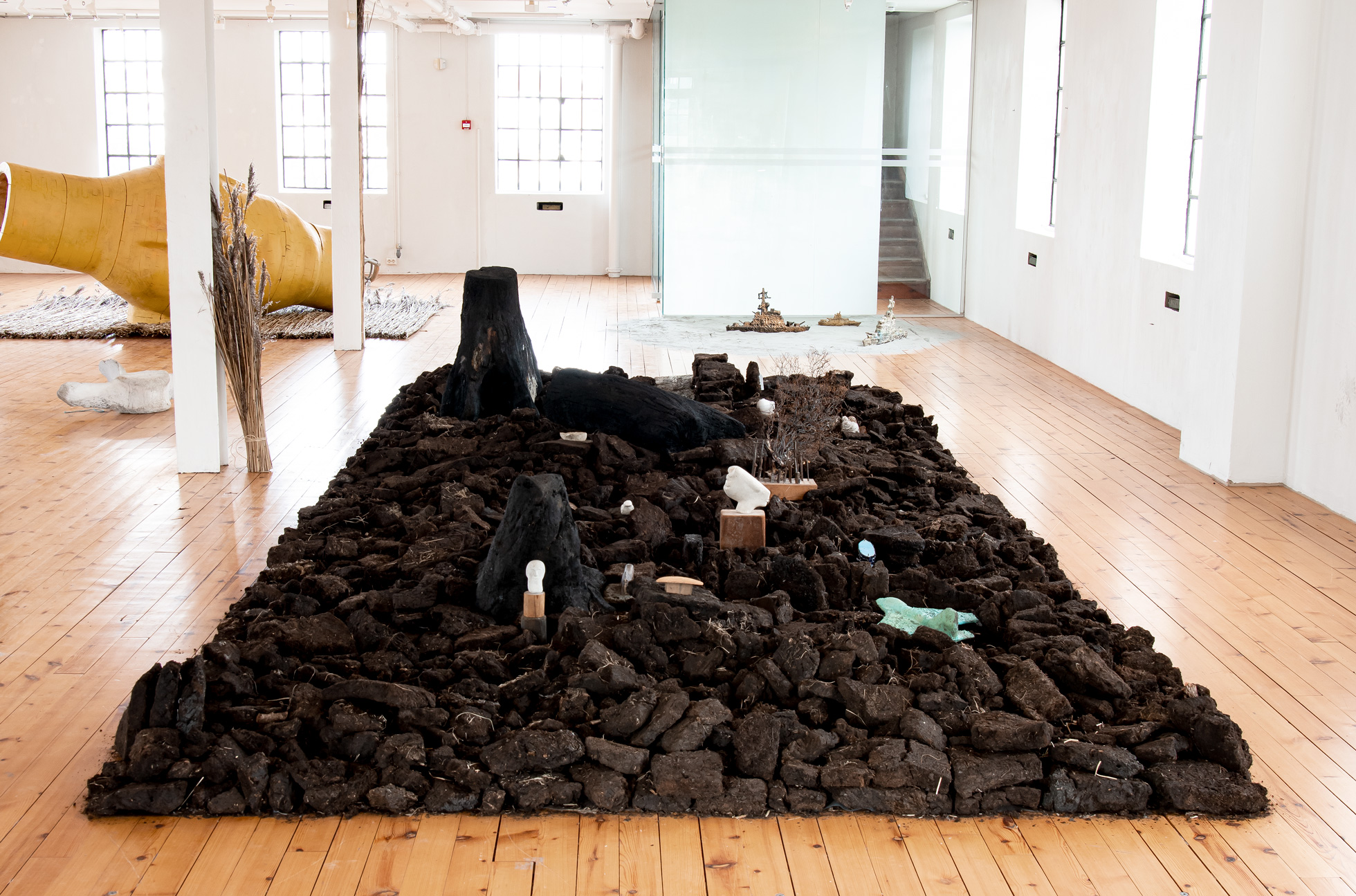
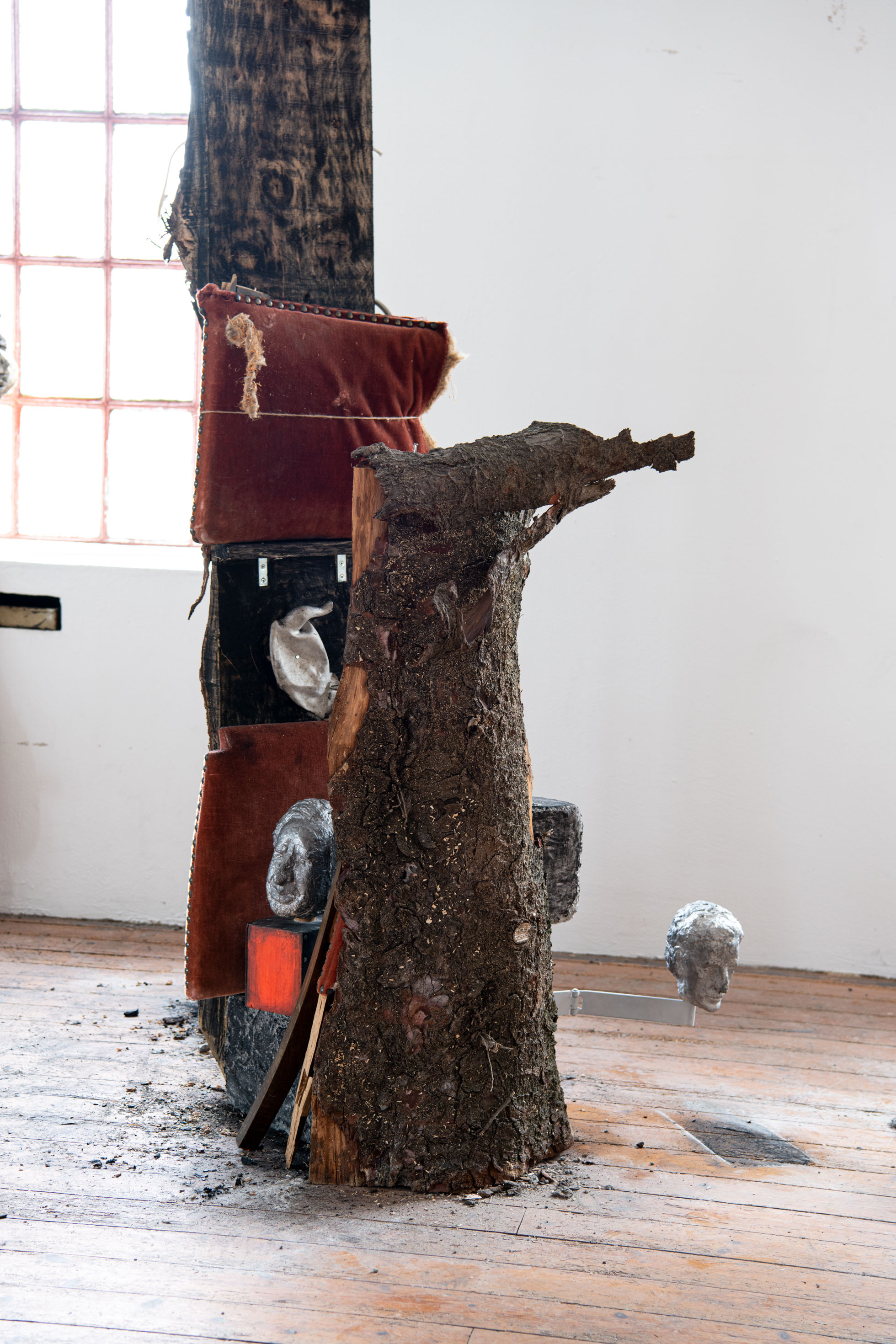
We have been given the opportunity to take a journey through Gunnar's works. Part of this journey was our visit to Kviteseid where Gunnar lived and worked. The experience of visiting Gunnar's studio made impressions, impressions that were unexpected and inspiring. The studio felt completely alive despite Gunnar's absence. This place, these rooms, were clearly his universe of thought as an artist; we got to walk in a labyrinth of traces and objects that opened up in a multitude of directions. We wanted to take part in and pass on his enormous energy, curiosity and logic, through experiences in landscapes we have in common with Gunnar.
We have been given the opportunity to take a journey through Gunnar's works. Part of this journey was our visit to Kviteseid where Gunnar lived and worked. The experience of visiting Gunnar's studio made impressions, impressions that were unexpected and inspiring. The studio felt completely alive despite Gunnar's absence. This place, these rooms, were clearly his universe of thought as an artist; we got to walk in a labyrinth of traces and objects that opened up in a multitude of directions. We wanted to take part in and pass on his enormous energy, curiosity and logic, through experiences in landscapes we have in common with Gunnar.
On the 2nd floor we took in the forest from Telemark, which was a backdrop for Gunnar in his studio and home in Kviteseid. On the 3rd floor, we met Gunnar through the open Jær-landscape where he grew up, in the form of peatbogs, reeds and sand. The exhibition architecture is both inspired by and a tribute to Gunnar's boundless creativity; a tribute through three artists. The architecture is intended as a celebration of his life and work, and the artistic legacy that lives on through us who have experienced parts of his universe.
The project received support from Rogaland County Municipality, Time Municipality, Arts Council Norway and Bildende Kunstneres Vederlagsfond.
The project received support from Rogaland County Municipality, Time Municipality, Arts Council Norway and Bildende Kunstneres Vederlagsfond.
Håndavtrykk / Handprint
Public sculpture for the project Book of Sand / Singular Hands - Sokndal, Norway (2021)
![Photo: Hans Edward Hammonds]()
![Photo: Håvard Sagen]()
![Photo: Hans Edward Hammonds]()
![Photo: Hans Edward Hammonds]()
![Photo: Hans Edward Hammonds]()
Public sculpture for the project Book of Sand / Singular Hands - Sokndal, Norway (2021)
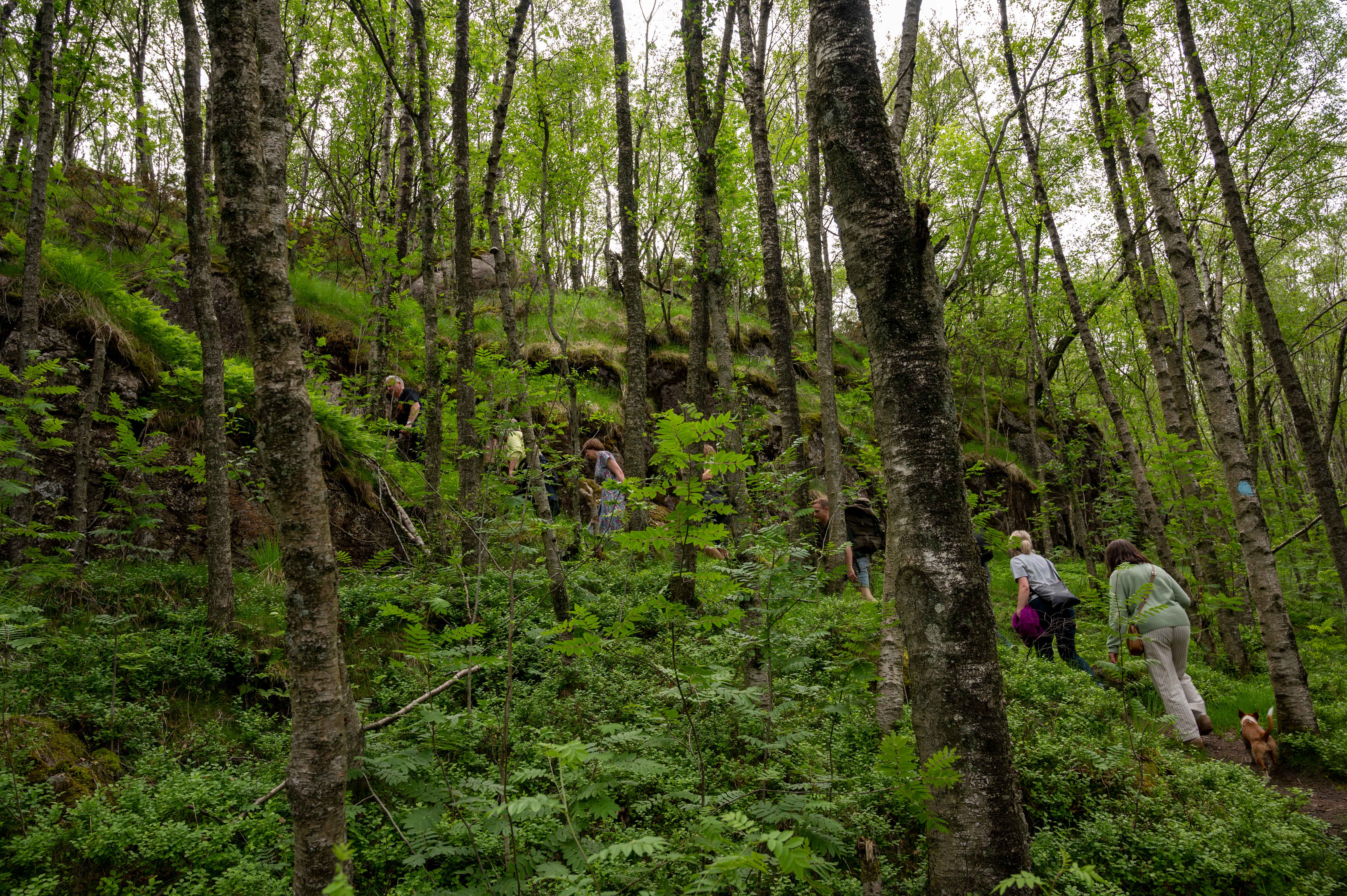

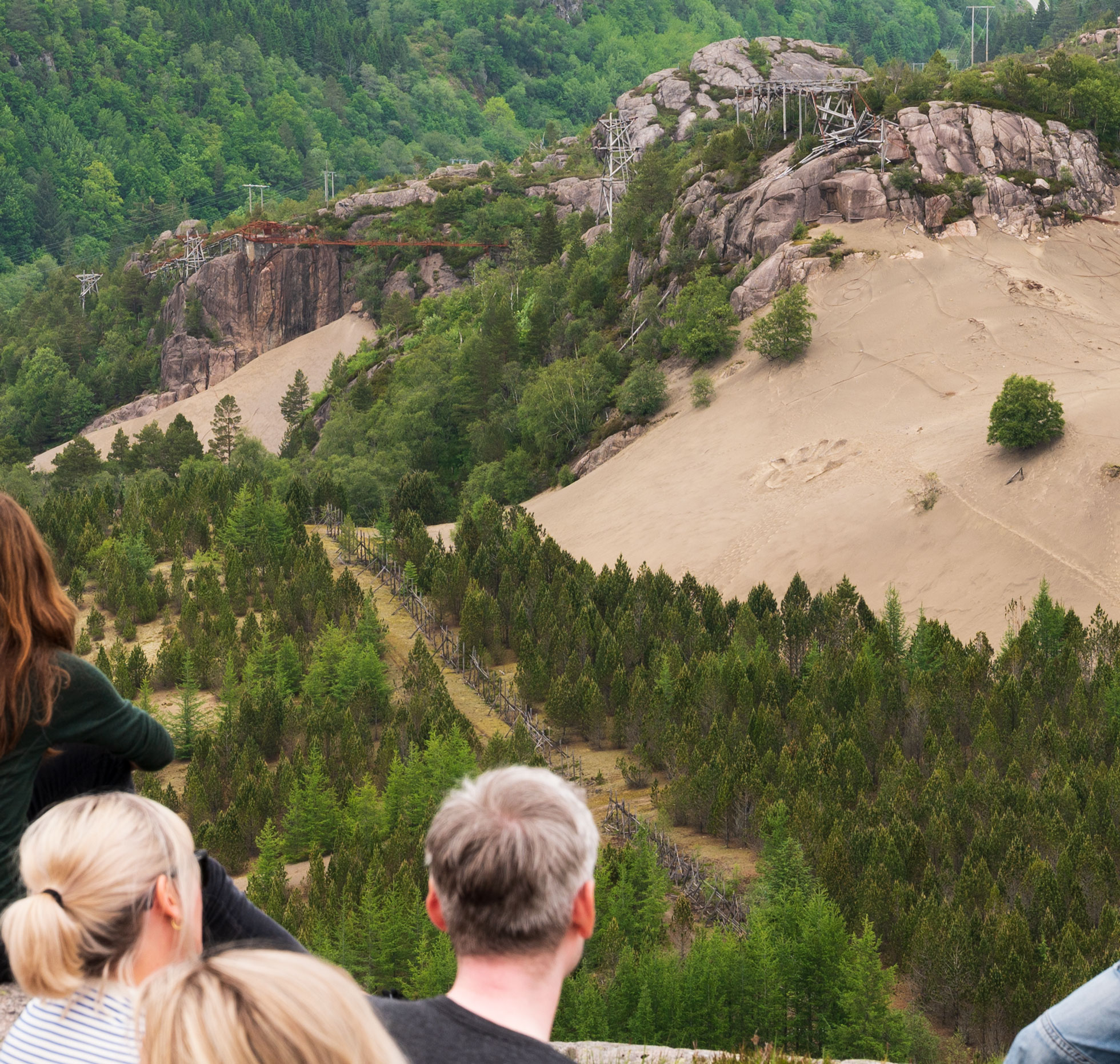
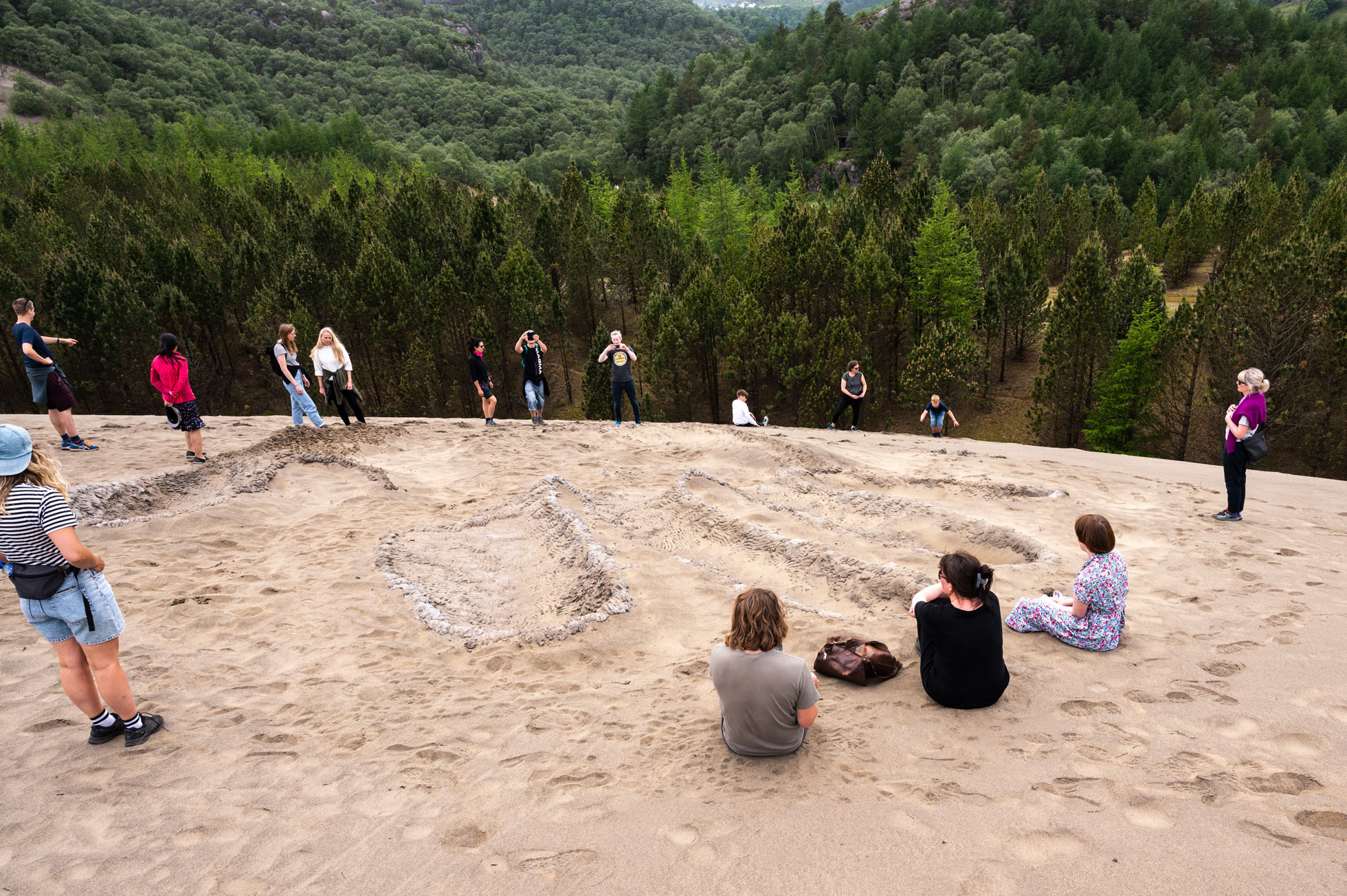
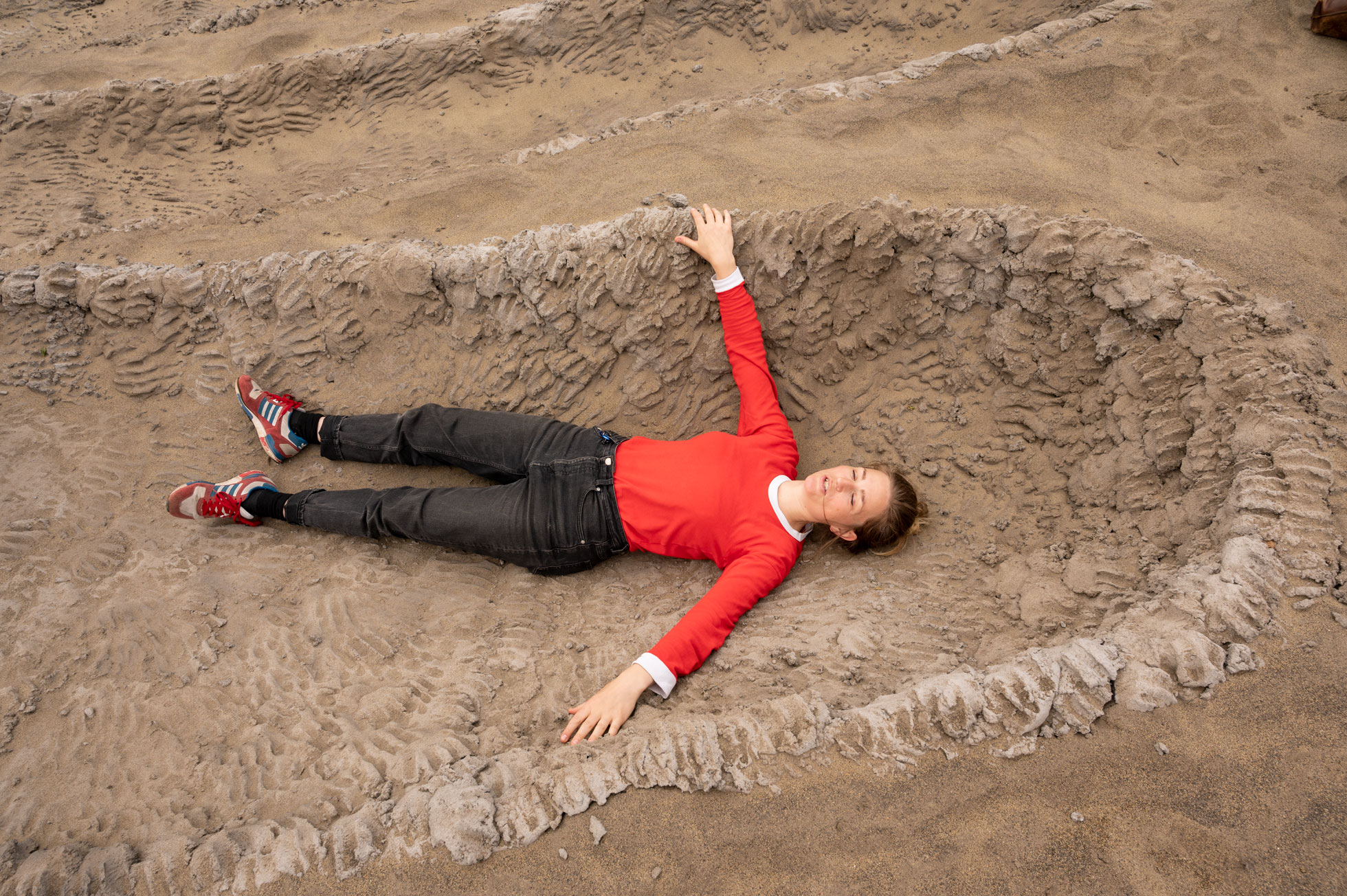
Book of Sand / Singular Hands was a collaborative project between artists Matt Bryans, Håvard Sagen, Ananda Serné, and social anthropologist/sociologist Merete Jonvik. The project unfolded from May to July 2021 across three artist-run spaces in Rogaland, Norway. Together, they explored the dormant mythologies of three specific locations: a historic mining landscape, a marketplace, and agricultural surroundings. These environments host the artist-run spaces Velferden Sokndal Scene for Samtidskunst, Studio17 (Nytorget, Stavanger), and Studio K (Kvernaland, Time).
Each landscape represents a culturally significant place undergoing transformation. The intention of Book of Sand / Singular Hands was to let echoes from these silenced landscapes return, inhabiting sonic and physical structures through an accumulating, multi-authored collaboration. The project aimed to reintroduce material from discontinued worlds, absorb the local environment through landscape, people and stories, and extend these narratives through a variety of artistic mediums.
Each landscape represents a culturally significant place undergoing transformation. The intention of Book of Sand / Singular Hands was to let echoes from these silenced landscapes return, inhabiting sonic and physical structures through an accumulating, multi-authored collaboration. The project aimed to reintroduce material from discontinued worlds, absorb the local environment through landscape, people and stories, and extend these narratives through a variety of artistic mediums.
For Book of Sand / Singular Hands, Sagen worked in the local sand deposits to create a permanent handprint sculpture using cement, mining sand and abandoned metal. The work, which remains in situ, was positioned to be viewable from multiple vantage points in the landscape when hiking toward the surrounding peaks. As part of the project, Sagen led public tours through the area, accompanied by geologist Pål Thjømøe who discussed the formation and history of the terrain. Representatives from the mining company that has operated in the region for decades also participated, offering insight into the site’s industrial past and future use.
The Book of Sand / Singular Hands project received support from Arts Council Norway, Rogaland County Municipality, Stavanger Municipality and Bildende Kunstneres Vederlagsfond.
The Book of Sand / Singular Hands project received support from Arts Council Norway, Rogaland County Municipality, Stavanger Municipality and Bildende Kunstneres Vederlagsfond.